At the turn of the century, millennials’ resolutions unravel the end of the ultimate accomplishment—the very reason the nation came into existence. Lately, as the country transitions from a state of hesitation to taking bold strides and making mature, serious statements abroad, every circle comes to a close quarter.
No figures better embody this transformation than Prince Matthew Daniel IV and Liam Noel Primelett Gallagher, who champion a flamboyant vision powered by Artificial Intelligence AI, Computer Generated Image CGI, Virtual Reality VR, and Augmented Reality—tools expanding the Course economy.

Engaging with an active audience under parameters approved by the parliamentary majority, they embrace innovation. Meanwhile, the craft of a coming-of-age story led by Antonietta Simon Sansonight Morcianne crumbles and collapses—especially as the Liberal Party suddenly turns the page, seeking to wean off the toxic effects she has left behind.
Here, in the shadowy expanse of an ever-growing urban forest, every Sixth of June marks a festival. In the spontaneously developed neighborhood near Masters’ Park (see Capital section above), Ana Elena Primelet Primelet de Santo Domingo showcases the wonders of chance and destiny. Her work, Missing the Courier, Meeting the One, earns nation-wide and world-wide acclaim thanks to policies that favor immigration and aid for special-needs children.
With her sister, Julia Anne Primelett Primelett de Santo Domingo, she carries forward these efforts in The Sun and Daughters, focusing on such liaisons. Acts of kind-ness, though small, ripple out-ward—gestures that leave lasting impacts. Time runs short to recount the count-less rare occasions when individuals have up-lifted society, yet Liberal Party MPs Roberta Kristen Kanu Reeves and Maria Sabina Sianek Wolalles, each serving at different critical junctures, persist in championing dialogue and housing policies. The former remains devoted to regulations easing international phone roaming.
The journey began with the air-borne naming of Mr Dickett’s, once Deputy Chairman of the Round Table on the Twentieth of March 1983. Land owner-ship passed from hand to hand under the sway of neighboring protectorates. Major powers—Italy, France, the United Kingdom, and to some extent, Spain and Portugal—left cultural legacies that shaped the island’s identity. These influences, deeply rooted, manifested in a tradition of multi-lingualism.
Historically, these voices never reaped benefits from nobility but rather served as a vicarage under the Commonwealth. Since the British Empire asserted control with the Act of Admission on the Twentieth of March Eight-Teen Eighty-Nine—by choice of the Course people—every reigning Master there-after renounced honorary titles. Instead, the first in line took on a suffix linked to land owner-ship, where twenty off-spring were raised.
Queen Victoria, in a momentous shift, allowed the ruling power to pass through the marriage of Queen Jolanda Juliet Concetta Witchfield and Master Angelo Anthony II. The near independence obtained by Espiridione I and Chiara saw the light for a free country.
The foundation of governance rested on the protection afforded by neigh-boring great powers. Democratic reform gradually took root, giving the people a voice. Until Nine-Teen Ninenty-One, the island’s rulers—Masters such as Achille Espiridione I, Angelo Anthony II, and Nunzio Nicola III—governed with supreme authority among a network of land-owning peers, mostly connected by lineage. Each Master’s title was tied to their most significant achievement.
They divided the island into Zones, buying land bit by bit, zone by zone, until they established a rule of law that freed the country from foreign influence and patronage. This seemingly chaotic process ultimately formed a coherent legal framework. This is the chronicle, though shaped by imagination, anchored in real events and emblematic figures who left their marks since the dawn of the one-man state-of-the-art governance in their respective Zones.
Jolanda Juliet II immortalized the adventures of Achille Espiridione I in fairy tales—one of the earliest figures to enter modern popular culture. As a young child, he overthrew Napoleonic rule, liberating small land-owners under its control. By the late Eighteenth Century, Pasquale Paoli had already expelled the French government in favor of British patronage. However, the final spark of revolution was ignited by Napoleon II’s illegitimate daughter, Miriam Caroline Cere Ricci. In the end, Achille Espiridione seized control.
His motto—an anthem of Zones-owners’ liberty—championed the right to self-determination. From his reign emerged a unique symbiosis between the vast Commonwealth dominion and localized Zone-based governance. Over the years, fathers, secret daughters, and sons wielded power, forming a dynasty of twenty-two siblings and forty-four nephews, each controlling separate lands.
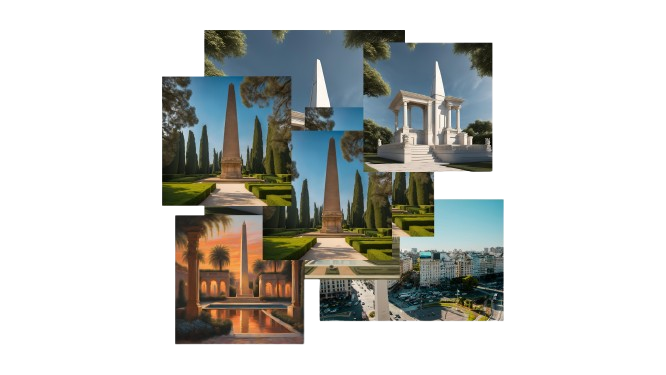
The forth-coming political manifesto high-lights the significance of house-hold nuclear assets. This principle is symbolized by the obelisks—pillars upon each family and society are built. These structures bridge earthly pleasures and divine ideals, embodying shared values. The island’s leadership, still titled Master, reflects a deep-seated respect for Zone-owners who constructed, embellished, and shaped the nation’s infrastructure, providing both function and artistic expression for its citizens.


Yet, as family legacies shape the nation’s fabric, they raise a dilemma—should one dedicate an entire life to a single partner? For better or worse, sentimental choices echo through statistics, intertwining with happiness. The eternal question—whether to be or not to be with someone forever—remains uncertain. The words yes or no cast long shadows, shaping the destinies of people across time and place, weaving together lives and legacies in an ever-evolving narrative.





Leave a Reply